

 LinkedIn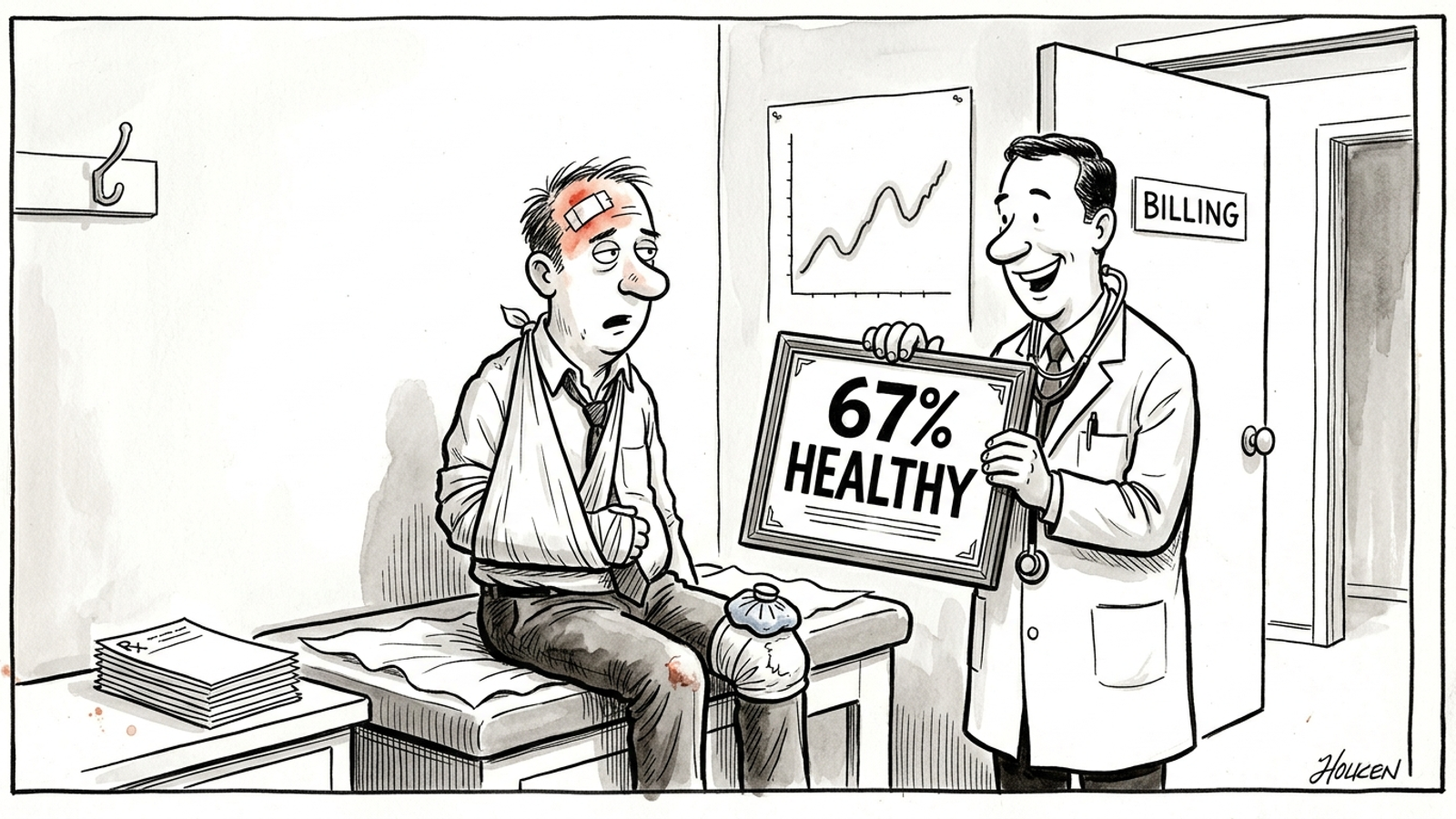
If you are the owner with four AI visibility tabs open and an annual plan in your inbox, do not sign because a dashboard says you are invisible. The 2026 version of the free Google Ads grader diagnoses for free, then leaves the fixing to you.
I know why the pitch lands. You want to see which content gaps keep you out of AI answers, and you want the reporting automated so you do not have to hire an agency to watch a chart. I spent years watching clients pay for Google Ads graders and SEO audits that ended in a PDF. Everyone nodded. No one fixed anything. Before you pay for another report, demand to see which gaps it names and who closes them.
What the dashboard can actually tell you
Credit where it is due: a good dashboard does a job you cannot reasonably do by hand. It asks the same set of prompts every week across ChatGPT, Perplexity, AI Overviews and other engines, then counts how often you get named. HubSpot calls one version Share of AI voice: prompts where your brand appears divided by total prompts tracked, times 100. Other tools frame the measure as your citations divided by total competitor citations on the same prompt set, engines and week.
Paired with mention rate and citation coverage per prompt, those numbers are useful. You can see which questions you appear in, which competitor appears instead, and whether that pattern changes. If you are opening tabs every Friday and trying to remember what ChatGPT said last Friday, automated tracking is a better use of your time.
But the trend line is a sample, not a census. One test of nearly 3,000 prompts found identical brand lists less than 1 in 100 times from run to run. That is why practitioners tell you to watch visibility percentage trends rather than single rankings. If buyers could ask 400 different questions and your dashboard tracks 30, a good score means you perform well for those 30, not the full universe.
I used to tell clients a rank tracker was truth. I was wrong. It was a photograph of a moving crowd. You can still learn from the photograph. You just need to know who chose where to point the camera. Before you trust a visibility score, ask to see the prompts behind it. If they do not sound like questions your buyers ask, the score is measuring the wrong conversation.
The gap list is not the fix
Here is the part the demo tends to skip. The salesperson calls the content gap list insights. You should call it a to-do list. Someone still has to work out which weak tags are dragging the score down, check which sources shape the answers, unblock the AI crawler, and write or rewrite the page that deserves the citation. That is the workflow Ahrefs lays out after reporting. A report does not do those jobs merely by naming them.
Conductor’s evaluation guide puts the problem bluntly: Profound is great at reporting problems but leaves you to solve them on your own. If that is the arrangement you buy, you need another way to make the fixes. It might be your team, a freelancer or another tool. Whatever the answer, put it beside the subscription before you decide what the dashboard costs you.
I have seen this movie before. A Google Ads grader told you your Quality Score was 5.4 and your negative lists were thin, then handed you a PDF and a booking link. Buyers describe a similar frustration with today’s dashboards: in-depth data but no clear action to take, with at least one switching away for that reason. Opening a tool to see a 67% visibility score does not tell you what to publish next. As one critic put it, that is like a doctor saying you are 67% healthy without saying what is wrong or what to fix.
Do not confuse a better view of the problem with a smaller problem. The scoreboard is not the game.
The subscription is only the first line of the bill
Let us price this honestly, because the checkout page will not. Entry pricing anchors the decision: Otterly Lite at $29 a month for 15 prompts and Standard at $189 for 100; Peec brand plans at $95, $245 and $495 for 50, 150 and 350 prompts; Profound from $99 a month for ChatGPT-only up to $399 for Growth. At those prices, an annual reporting-only plan can run $1,100 to $4,700 before anyone writes a word.
That answers part of your question. If all you want is automated visibility reporting without an agency watching it for you, that automation is available. The Otterly Looker Studio connector pulls coverage, mentions, share of voice, average rank and URL-level citations into Looker Studio on automatic sync. Peec can pull each client’s visibility and post a plain-language Slack summary plus a one-slide deck every week without a person touching it. You do not need to pay someone to assemble the same report by hand.
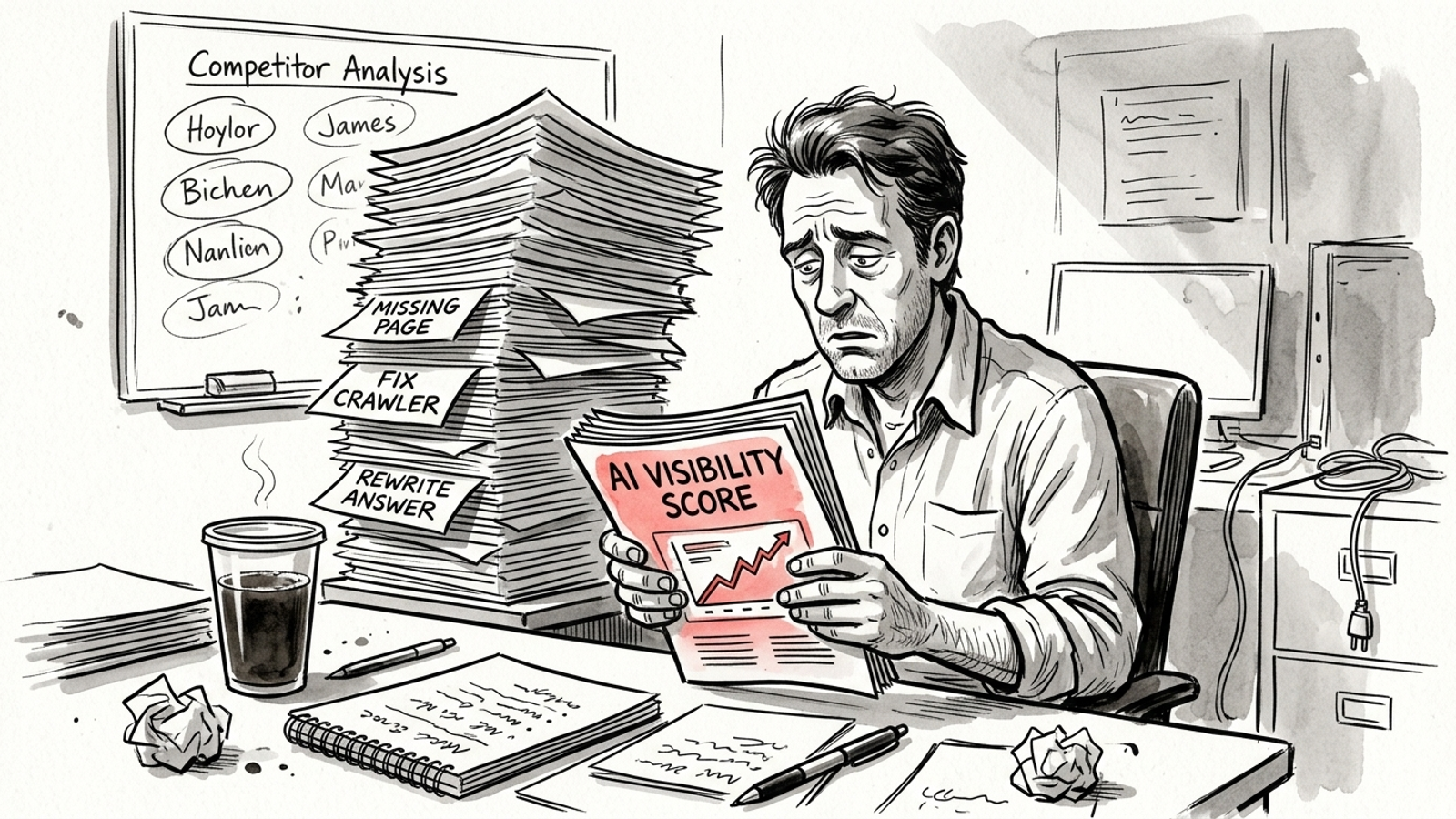
The bigger invoice arrives when you act on what the report says. Every gap needs someone who can diagnose it, write or revise the answer, publish the page and check the engines again. That is either your evenings or somebody else’s hours. Say you track 100 prompts and find 20 missing answers. At two hours each for research, writing and publishing, you have filled a workweek before checking whether ChatGPT noticed.
The subscription may still be worth paying. Just do not call it the whole price. A dashboard does not save you the agency fee if it moves the work to you and keeps the subscription. Put reporting and fixing on separate lines before you approve either one.
Ask these three questions on the demo call
You do not need a 40-point RFP. You need a screen share and three questions. I wish I had used them on every audit tool I recommended: will it get you cited or just track who did? Ask for what the vendor can show you, not what the slide promises.
- Does it name the specific missing page or answer? Ask to see the prompt, the competitor answer that won, and the page or paragraph you lack. A score alone tells you where to worry, not where to work. If the tool cannot point to a gap at that level, you are buying a thermometer.
- Who writes, publishes and fixes, and how fast? A gap found on Monday but left unwritten for six weeks is still a gap. Ask who does the writing, who ships the technical fix, and how many pages can go live per week without you chasing them. If the answer is your team, that is useful to know before you sign.
- Can you see what changed, when it changed and which engine moved? Ask for a dated log of actions and reasons, then look for later movement in ChatGPT or AI Overviews. No log means you cannot tell what was done. No engine movement means the work has not yet produced the result you wanted.
These questions turn a pleasant demo into a working plan. You are not asking the vendor to promise that every page will win a citation. You are asking whether you can follow the path from a missing answer to a shipped fix to a result you can check. If the path disappears between the first and second steps, you know who will be filling it in.
What a straight answer sounds like
On the first question, a straight vendor opens your prompt set and shows you a losing answer. Here is the prompt. Here is the competitor paragraph ChatGPT cited. Here is the page you do not have, or the answer on your existing page that needs work. You may disagree with the proposed fix, but at least you can examine it. A dodgy vendor shows you a health dial and talks about optimization until the call ends.
Ask where the prompts came from while the list is open. If they were not built from how your buyers actually ask, the gaps are theater. I rank tools by that test now: where do their prompts come from, and do they help close the gap? A precise answer to the wrong question will not help you much.
On the second and third questions, listen for a name and a date. Who writes the missing answer? Who ships it? What went live last week? What changed when the engines were checked again? If the answer is your team or your freelancer, fine. Price that work before you sign. If the answer is nobody, you have bought the grader with a nicer interface.
I keep a short list of the myths that keep dashboards selling. The most expensive one is that a gap report equals progress. It does not. It equals homework, and you need to know whose homework it is.
When a dashboard alone is the right buy
There is one case where I would tell you to buy the reporting and stop there: you already have the crew to close the gaps. You have a writer who can ship two answers a week without waiting for a brief, someone who can publish in your CMS without a ticket queue, and someone who will check next week whether Perplexity picked the work up. If that crew exists, a $189 tracker plus automated Looker reports is cheap intelligence. You do not need anyone else to do the work. You need the prompt list and the trend line.

If that crew does not exist, do not buy the tracker and hope it somehow appears. I was the freelancer who got the 2am email after the PDF arrived. I know how easily a neat report becomes a pile of tasks nobody had time to budget for. Sign for a dashboard only if you have priced the fixing. Otherwise, look for an arrangement that names the missing pages and ships them, with changes logged and tied to movement. groas runs that way on purpose: tracking alongside the writing, technical fixes and weekly record of what moved. You should know who owns the work, not just who sends the chart.
Before you sign anything, run the trial around the way your buyers actually ask. Pull 20 real questions from your last month of sales calls and quote requests, rather than accepting only the vendor’s starter list. Put those questions into the trial and watch for two weeks. You want to see, prompt by prompt, where you were cited, which competitor took the answer instead and whether the pattern holds when you check again. A free baseline of about 25 prompts built around direct buyer questions gives you room for that set. The sample decides whether the rest of the data means anything.
Then force the fixing conversation with one losing prompt. Say: show me the exact page I am missing, who would write it, when it would ship and how we would know whether ChatGPT or AI Overviews picked it up. The order matters. The page has to exist. The crawler has to reach it. The answer has to be shaped so an engine can quote it. Only then can you check whether the citation changed. If the vendor jumps from a gap to a projected score without walking you through that work, you are being sold the PDF again.
Finally, price both halves in writing. Put the subscription on one line and the labor to close gaps on the next. Say you spend $20k a month on ads and add a $189 tracker. That looks cheap until 20 missing answers need research, writing, publishing and a recheck. At the two-hour estimate, that is 40 hours you do not have, or work you need to assign and pay for. The relevant question is not whether the dashboard is affordable. It is whether the missing answers will get finished.
You came to this search because you felt the shift before the reports caught it. Buyers ask ChatGPT first now, and you want to be the name it says back. Keep that instinct. Do not pay someone merely to tell you that you are missing. If the vendor can name the missing answer, ship it, log it and show you the engine moving, sign. If it cannot, close the tab.
— Alexander